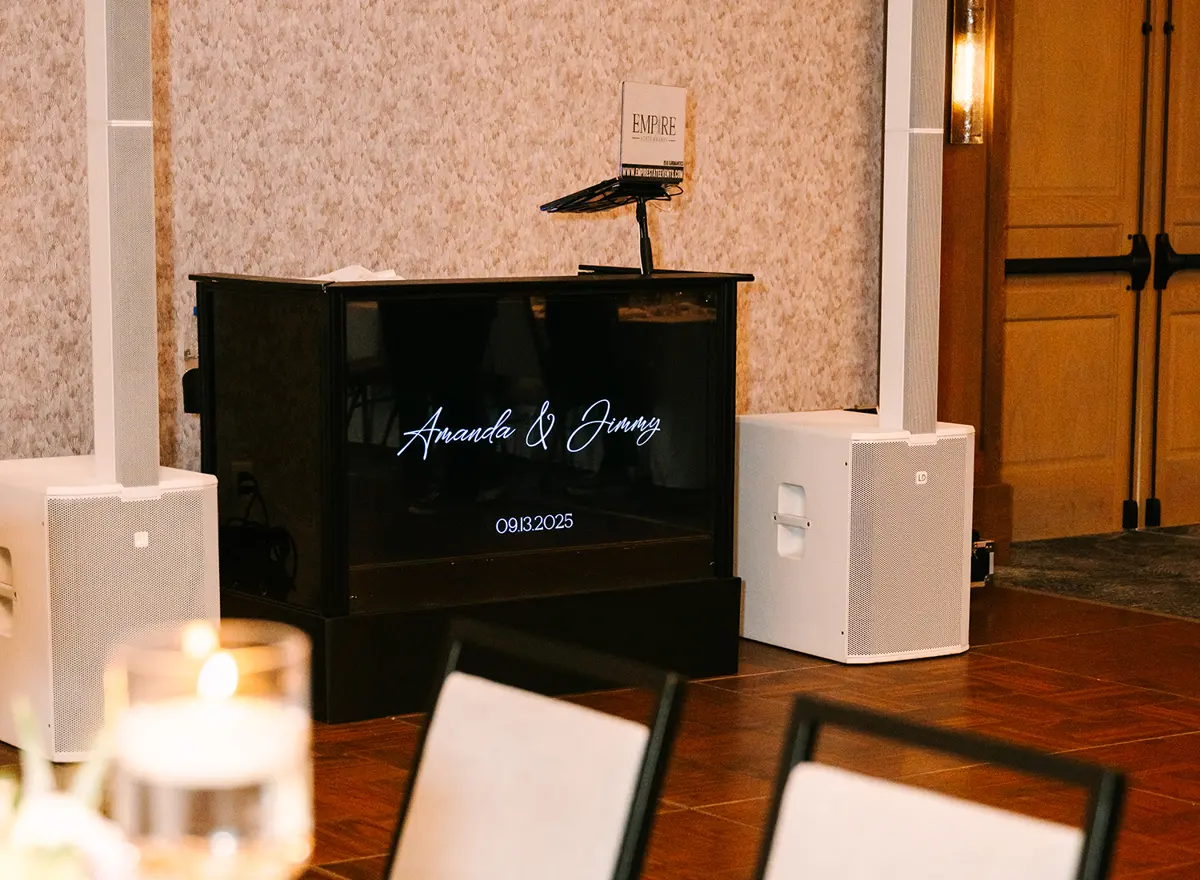
A DJ can explain the speakers perfectly and still leave you unsure who is coming to your wedding. The answers worth taking home identify a person and explain what that person has agreed to do.
We recommend choosing the company that can tell you, in writing, who will play your wedding, how your music will be handled, what the total covers and what happens when something goes wrong.
Use these 24 questions to compare quotes. The ten decisions below follow the wedding from choosing your DJ to signing. Tomorrow, send each company the same outline of your day and request written answers to anything unclear.
| Ask about | Get a clear answer on |
|---|---|
| The performer | DJ's name, meeting process and replacement arrangements |
| Music and hosting | Your preferences, guest requests and MC style |
| Coverage | Ceremony, cocktail hour, reception and exact performance hours |
| Reliability | Backup person, on-site equipment and music access |
| Venue needs | Load-in, power, sound limits and weather plan |
| Total cost | Included work, optional additions, travel and overtime |
| Booking terms | Payment dates, cancellation, rescheduling and written scope |
Who will actually DJ our wedding?
The name matters because you're choosing someone's judgment as well as their music. At VARA, we can curate a DJ from our roster around what you're looking for. Explain where your tastes differ. You can agree to get married and still disagree about ABBA.
Hear that connection in wedding footage with room audio. Establish when you can speak with the proposed DJ, including whether that happens before or after signing, and have the performer arrangement recorded in writing.
- Who will be our DJ, and when can we meet or speak with them?
- Can we see recent wedding footage with that DJ's actual music and announcements?
| Sample | What you can judge |
|---|---|
| Highlight reel | Visual presentation and event atmosphere |
| Recent footage with room audio | Actual mixing, transitions and announcements |
What wedding experience matters for our plans?
Relevant experience means being able to explain a decision when the original plan stopped working. One bride wrote that it rained and the buses ran an hour late. Later, when the order of events got confused, the DJ asked what she wanted to happen and made it happen.
Use that scene to get beyond a count of weddings played. Describe what needs care at your wedding. A useful answer explains who the DJ consulted and what changed afterward, because experience matters when it informs a decision.
- Have you played weddings with our guest mix, traditions and type of venue?
- Can you describe a change during a wedding and how you handled it?
How will you use our must-play and do-not-play lists?
Your exclusions deserve attention before you fill the evening with favorites. Beth Helmstetter of Beth Helmstetter Events advises in Inside Weddings: "I recommend prioritizing your list by first creating a 'do not play' list." Starting there makes your boundaries clear before the DJ begins interpreting your taste.
Share exact recordings for formal moments and explain any cue or edit. Music planning at VARA happens in our app. Whatever system a company uses, confirm how exclusions are marked and when choices become final, because a song title can leave the version undecided.
- How do we share must-play, play-if-possible and do-not-play songs?
- Can you source the exact recordings or edits we want, and what's the deadline?
| List | What it means |
|---|---|
| Must-play | Songs that need a place in the night |
| Play if possible | Preferences the DJ can work around the room |
| Do not play | Songs or styles you've specifically ruled out |
Further guidance: Beth Helmstetter's reception music advice in Inside Weddings.
See how we shape music, hosting and planning around your wedding in the VARA experience.
What happens when guests request songs?
A do-not-play list only settles the issue if everyone knows what happens when a guest challenges it. Agree whether requests are welcome and who can approve an exception. Wedding planning reveals how many people consider themselves music directors.
That conversation can also make room for family traditions. A couple's review described requesting Brazilian songs and being delighted with how they were played. Name your traditions specifically, because a broad genre label may leave out what matters to your family.
- How do you filter guest requests, especially songs on our do-not-play list?
- How would you build a set for our mix of ages and musical backgrounds?
| Policy | Agree on |
|---|---|
| Welcome | Check against your preferences |
| Limited | Who can request and any restrictions |
| None | How the DJ explains the policy |
Will you also be our MC, and what's your style?
The person making announcements helps set the tone of the room, so hear their voice before judging their hosting style. Discuss names, pronunciations, introduction order and the activities you want included.
Those announcements also depend on a workable schedule. Sofia Bute, Event Director at The Heritage Collection Planning, told THE WED: "I always suggest building in a cushion for every transition, every toast, every moment of the day." Leave that room in the plan and establish who confirms a formal moment is ready before the MC announces it.
- Who handles the announcements, and can we hear their MC style?
- How do we confirm names, pronunciations and activities we want to include or skip?
Is ceremony and cocktail-hour sound included?
Coverage needs to follow the guests through the day, because reception speakers tell you little about what people will hear at the ceremony. At VARA, we provide a ceremony microphone because guests need to hear the officiant. Have each company name the spaces covered, including cocktails elsewhere.
For each space, establish who provides and operates sound. An available microphone leaves its placement and operation unanswered.
- Which spaces and parts of the day are covered by this quote?
- Who provides, checks and operates microphones for the vows and speeches?
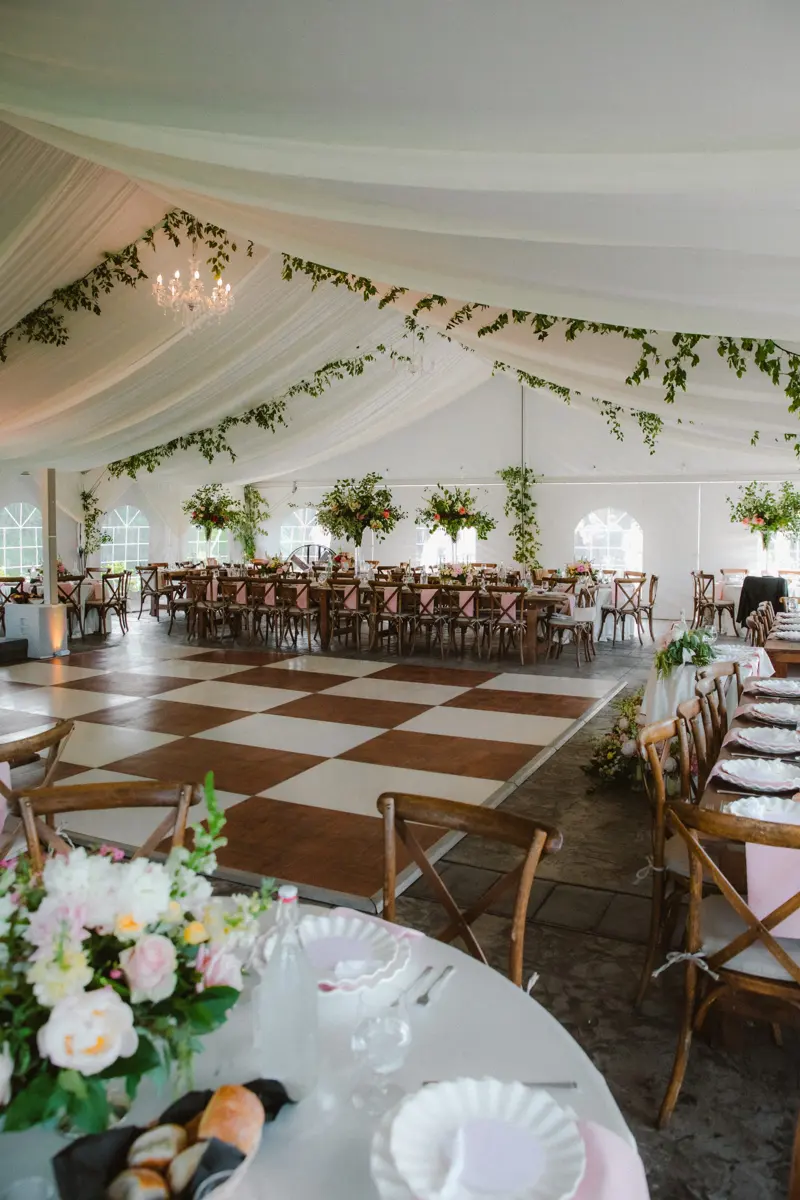
Further guidance: Here Comes The Guide's sound and venue questions.
What's the backup plan for illness or equipment failure?
Zola's wedding DJ guide puts the performer question plainly: "If you're unable to perform on the day of, do you have a backup plan?" At VARA, every DJ works with an assistant, which alone doesn't answer a replacement question. A useful answer identifies who arranges another performer and how your plans reach them.
Equipment needs its own answer because replacing a person does not explain how playback resumes. Establish which spares are on site and who restores sound, including how music plays without internet. Keep confirmed commitments separate from something the company would merely try to arrange.
- If our DJ can't attend, how is a replacement chosen and briefed?
- What on-site backups and offline music access do you have?
| Problem | Confirm |
|---|---|
| Performer unavailable | Replacement process, notice and transfer of plans |
| Equipment failure | On-site spares and the recovery process |
| Internet unavailable | How agreed music plays without streaming |
Bring your date, venue and questions to a conversation with VARA, so you can compare a proposal with your plans.
What do you need from our venue and other vendors?
A plan for your venue needs confirmation from the people running it. Have the DJ explain access and power needs, then let the venue check them before the layout is settled. Confirm setup time and permitted equipment placement for your event.
An outdoor setup needs an agreed weather decision and somewhere for the music to go if plans change. Establish who tells the other vendors, because moving inside affects their work too.
That coordination includes meals and attire. AJ Williams, founder and creative director of AJ Events, advises couples to 'make sure to ask your DJ how many meals they'll require (especially if they're bringing a partner!).' Confirm dietary needs and meal timing with your caterer.
- What access, power, setup time and outdoor fallback do you need?
- How do you coordinate timing, meals and attire with our vendor team?
| Before guests arrive | Before music ends |
|---|---|
| Access and sound check | Curfew and permitted volume |
| Power and safe placement | Breakdown access and timing |
| Weather decision and shelter | Who approves any schedule change |
Further guidance: Bridal Musings' planner interviews, including AJ Williams.
What's included in the total, and what costs extra?
A total becomes useful when every company is quoting for the same hours and spaces. Otherwise, a lower number may leave work out of the comparison. Have missing coverage priced before comparing amounts. At VARA, full pricing comes in your custom wedding guide after the discovery call.
Decide which additions you'll use. You can like the photo booth and still leave it out. Check charges that could change the total, including travel and overtime. Record who approves extra time and confirm the venue permits it, because permission and cost are separate questions.
- Can we see the complete total with inclusions and optional additions separated?
- What are the overtime and travel charges, and who can approve extra time?
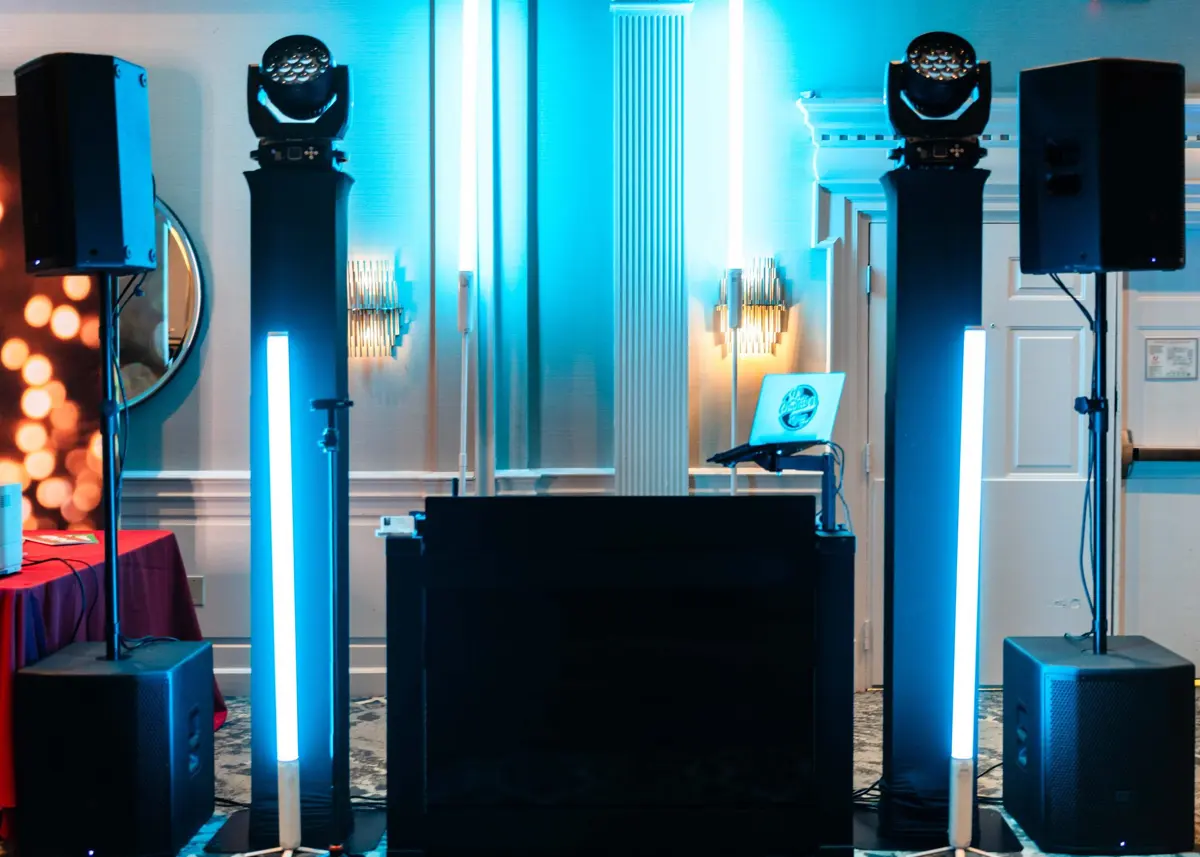
What should we clarify before signing the agreement?
The agreement is where the earlier answers need to hold up. Attorneys at Pike & Lustig LLP warn that vendor contracts may permit a "reasonable substitute" even when you dislike the replacement. Read the substitution wording beside the named performer arrangement and resolve any difference before paying.
Compare the quoted services and payment dates too. Understand what cancellation or a date change would mean, and how later changes enter the agreement. Check the venue's insurance requirements. The written terms let you check what you're actually agreeing to.
- What's the payment schedule, and how do cancellation or date changes work?
- Can you meet our venue's insurance requirements and document the agreed service?
| For each DJ | Record the same detail |
|---|---|
| Person and coverage | Performer arrangement, spaces and hours |
| Price | Total, extras, travel and overtime |
| Contingency | Substitution and equipment backup arrangements |
| Terms | Payment dates, cancellation and rescheduling |
Further guidance: Pike & Lustig LLP on wedding vendor contract pitfalls.
How do these questions work when planning with VARA?
Bring your wedding outline to Corey, who runs our consultations. Discuss the music that matters to you and the coverage you need. Ask for the answers in writing so you can compare what each company is offering.
Read the proposal against your outline rather than assuming everything discussed is included. Clarify open details before deciding.
- Which DJ would you recommend for our music and hosting preferences?
- What does the proposal cover, and which additions can we choose?
- How will we share music choices and update our plans in your app?
- What will our DJ and assistant each handle on the wedding day?
Frequently asked questions
What are the most important questions to ask a wedding DJ?
Ask for the DJ's name, music plan, full price and backup plan in writing. Those four let you compare companies fairly.
Should we meet the DJ before booking?
Yes, ask when you can speak with the proposed performer and whether that comes before or after you sign.
Can we give a wedding DJ a do-not-play list?
Yes. Write down your exclusions, confirm how the provider uses them and agree who may approve an exception.
Does a wedding DJ also provide ceremony microphones?
Confirm that the quote includes ceremony microphones and who operates them, including any move to another space.
What should we have ready for a DJ consultation?
Bring your date, venue, an outline of the coverage you need and music examples. Keep open questions next to the proposal.
Bring your questions. We'll bring a plan.
Tomorrow, request written answers to the gaps in each quote. If a company will not put the performer, the music plan, the total and the plan for something going wrong in writing, we would keep looking.
Check your date